Hello Adventure: A Designer's Review for Real Projects
As a designer who spends countless hours translating digital files into tangible thread and fabric, I approach every new machine embroidery design with a mix of excitement and skepticism. The market is flooded with generic graphics, but finding a piece that truly translates well from screen to stitch is rare. Today, I am putting the Hello Adventure design through its paces. This isn't just about checking file formats; it is about understanding how this specific embroidery project will perform when you actually sit down at your machine to create a finished product.
First Impressions: Mood and Visual Weight
When I first opened the Hello Adventure digital file, the immediate impression was one of optimistic movement. The typography feels dynamic, suggesting forward momentum rather than static decoration. In the world of Crafts, where visual hierarchy dictates how a customer interacts with a product, this design stands out. It does not scream for attention in an aggressive way; instead, it invites curiosity. The layout suggests a balance between negative space and filled areas, which is crucial for maintaining clarity in a small hoop size.
From a Graphics perspective, the lines appear clean and confident. There are no overly intricate flourishes that would likely tangle during stitching or require excessive trimming. This simplicity is often the hallmark of a professional-grade embroidery file. It feels like a design that understands its purpose: to be a statement piece on a garment or home good without overwhelming the underlying texture of the material.
The Real-World Test: Custom Apparel and Totes
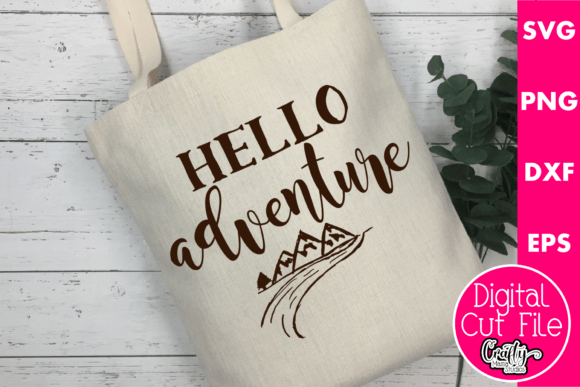
To truly evaluate Hello Adventure, I need to visualize it on a real item. Let’s imagine I am preparing a custom embroidered tote bag for a local boutique client. Tote bags are tricky because the canvas can be thick and textured. If the design relies too heavily on fine details, they get lost in the weave. However, the bold nature of the Hello Adventure Quote Svg Files suggests it will hold up beautifully here.
I envision using a dense fill stitch for the main lettering to ensure opacity against the natural canvas color. The design’s shape allows for a balanced distribution of weight, meaning the bag won’t look top-heavy. For a sweatshirt embroidery project, the story changes slightly. Sweatshirts have a soft, fuzzy pile. Here, the stitch density becomes critical. If the design is too sparse, the fleece will show through, ruining the crispness of the quote. But if it is too dense, the fabric might pucker. Based on the visual weight of the Hello Adventure graphic, it seems designed to accommodate a medium density that works well for both cotton tees and heavier knits.
This versatility makes it a strong candidate for custom apparel lines. Whether it is a personalized gift for a college student heading off to study abroad or a branded item for a travel blog, the message resonates. The design supports the narrative of the product, adding value beyond just aesthetics.
Navigating Fabric Challenges and Hoop Constraints
No design is perfect for every scenario, and as a reviewer, my job is to highlight where caution is needed. While Hello Adventure looks great on paper, certain applications require careful planning. If you are considering this for a cap or a curved surface, the curvature of the text must be tested. Flat designs can sometimes distort when wrapped around a brim. You may need to adjust the arc settings in your software before converting the SVG to an actual digital embroidery file.
Texture is another factor. On highly textured fabrics like burlap or heavy linen, the finer serifs or edges of the letters might get swallowed by the grain. In these cases, I recommend increasing the line weight slightly or opting for a satin stitch border to define the edges. Conversely, on very thin or stretchy fabrics, such as jersey knit for baby clothes, the stabilizer choice becomes paramount. Without a cut-away stabilizer, the tension required for the fill stitches could cause the fabric to ripple, making the finished product look unprofessional.
For those looking to use this for baby embroidery, keep in mind that the font style should remain legible even after multiple washes. The Hello Adventure design appears robust enough to withstand the wear and tear of nursery items, provided the thread colors are chosen correctly. High contrast is key here; light gray thread on a white onesie will fade visually over time, whereas a vibrant blue or deep forest green will maintain its impact.
Business Viability for Etsy Sellers and Makers
For the Etsy seller or small shop owner, the commercial potential of a design is just as important as its aesthetic appeal. Hello Adventure fits perfectly into the "lifestyle" niche, which is perennially popular. It appeals to travelers, outdoor enthusiasts, and parents looking for meaningful gifts. When creating printable mockups for your listings, this design performs exceptionally well because it reads clearly even at smaller thumbnail sizes.
However, before you list any items featuring this design, you must verify the licensing terms. The product description mentions it includes SVG, EPS, DXF, and PNG formats, which is excellent for versatility, but the license for selling physical goods versus reselling the digital file itself can vary. Always confirm whether you are allowed to sell the finished product commercially. Assuming you have the right to use it, this design can serve as a cornerstone for a seasonal collection, perhaps paired with other nature-themed elements for a cohesive craft business brand.
Furthermore, consider the production speed. Designs with high stitch counts can slow down your workflow, especially during holiday rushes. Since Hello Adventure appears to be a quote-based design, it likely has a moderate stitch count, allowing you to produce holiday embroidery gifts efficiently without sacrificing quality. This efficiency directly impacts your profit margins and ability to fulfill orders quickly.
Practical Designer Notes for Success
If you decide to incorporate Hello Adventure into your next project, here are my top recommendations for ensuring a flawless result:
- Test on Scrap Fabric First: Never skip the test run. Stitch the design on a scrap piece of the exact fabric you plan to use. Check for registration issues, thread breaks, or puckering.
- Check Thread Color Contrast: Ensure the thread color pops against the background. Use a color wheel to find complementary shades that enhance readability.
- Review Stitch Density: If the design looks too open, add a second layer of fill. If it looks too heavy, reduce the density to prevent fabric distortion.
- Confirm Hoop Size: Measure the bounding box of the design to ensure it fits comfortably within your hoop with room for the needle to move freely.
- Inspect Small Details: Zoom in on the final output. Are there tiny gaps in the fill? Do the letters connect properly? Fix these in your digitizing software before the final run.
- Use Proper Stabilizer: Match the stabilizer to the fabric weight. A tear-away might work for a stiff shirt, but a cut-away is better for stretchy materials.
- Verify Licensing: Double-check the terms regarding commercial embroidery to avoid legal issues with your shop.
In conclusion, Hello Adventure is more than just a pretty graphic; it is a functional tool for creators who want to add personality to their work. Its adaptability across different mediums, from tote bag design to pillow covers, makes it a valuable asset in any maker’s library. By respecting the technical requirements of embroidery and applying sound design judgment, you can turn this simple quote into a standout piece that customers will love to wear and display.